e-CP Project
Electrifying high-temperature chemical processes
Project coordinated by ENSICAEN
Duration: 4 years
A budget of 3.98 million euros
1 major industrial partner: TotalEnergies
Background and challenges
The e-CP (Electrothermal Chemical Processes) project tackles a major challenge of the energy transition: reducing CO₂ emissions associated with high-temperature chemical processes, which account for a significant proportion of this industry’s energy consumption. Processes such as methane steam reforming (hydrogen production), naphtha steam cracking (production of olefins such as ethylene), and propane dehydrogenation are carried out at high temperatures (600–900 °C). The heat is supplied by combustion (natural gas, coke).
This approach results in several hundred million tonnes of CO₂ being emitted each year. Achieving the climate targets set for 2030 and 2050 will require a rethink of these major processes.
Scientific objectives
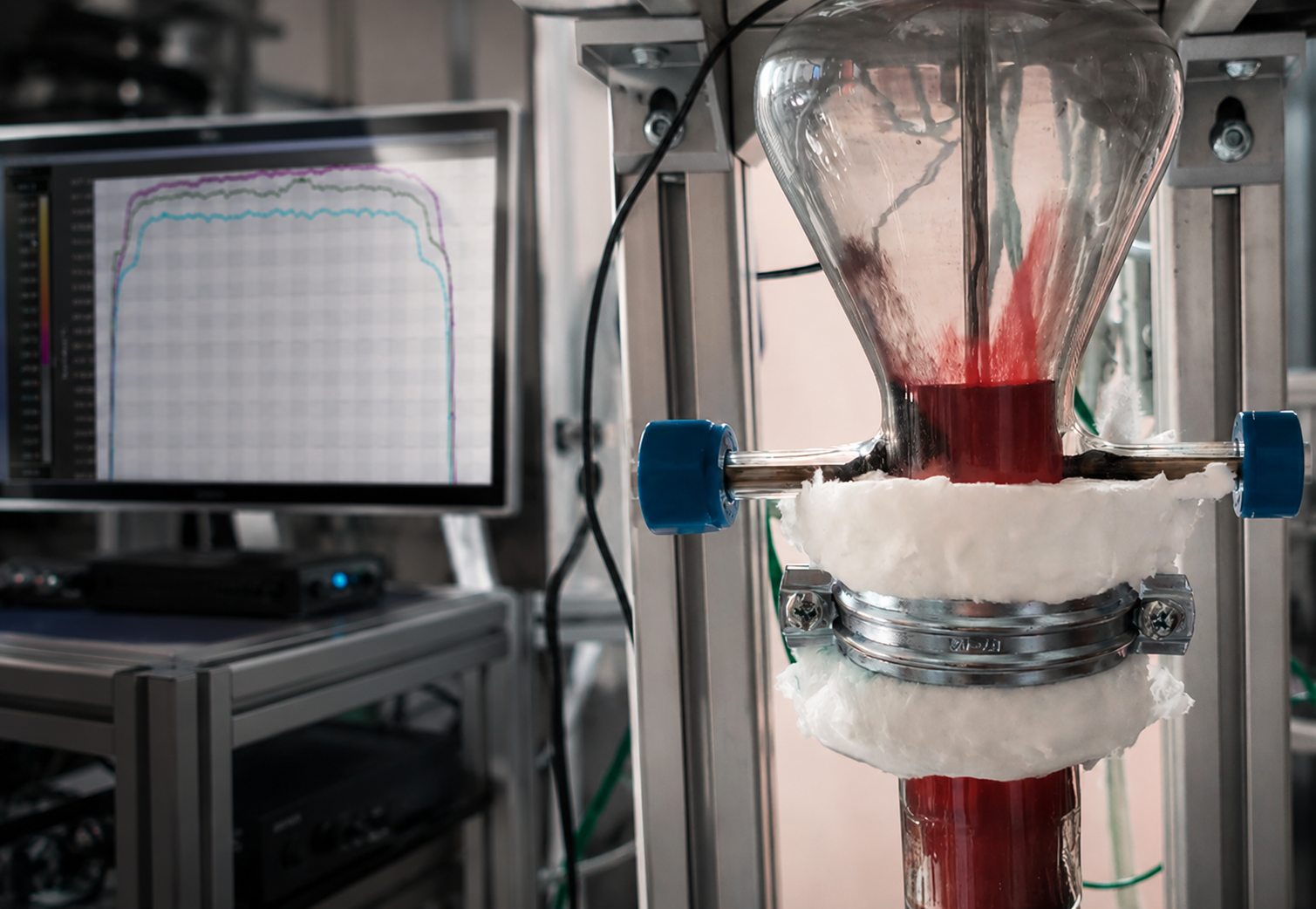
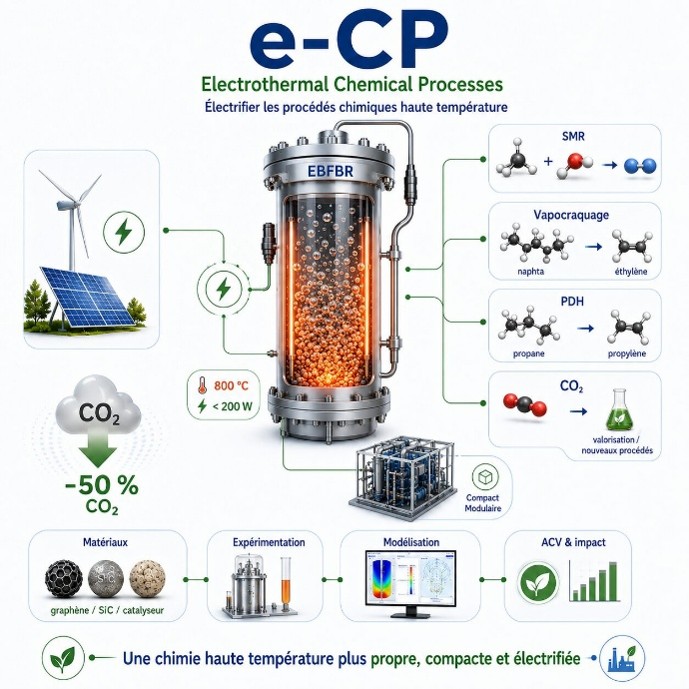
The solution proposed by e-CP is based on a simple idea: replacing fossil fuel-generated heat (which produces CO₂) with carbon-free electricity. To achieve this, the project proposes a new type of reactor: the electrified bubbling fluidised bed reactor (EBFBR).
Through the Joule effect (the principle used in cooking hobs, toasters, auxiliary heating systems, etc.), this reactor can convert electricity into heat at the very heart of the catalyst bed. The conductive materials used (graphene, conductive SiC, combinations thereof, and catalytic composites) fulfil a
dual role: they facilitate the chemical reaction whilst generating heat within the reactor’s active volume. This approach eliminates heat loss associated with heated walls, improves process stability (by preventing destructive hot spots) and makes the process compact and flexible.
An initial prototype, developed at ENSICAEN, has already confirmed the feasibility of the technology: a stable temperature of 800 °C is achieved using less than 200 W of electrical power for a volume of 90 mL, representing an unprecedented level of performance. Building on this proof of concept, the project proposes a research programme to confirm the technology’s potential, focusing on four key areas:
– To design innovative materials combining catalytic efficiency, electrical conductivity and mechanical strength (composite pellets based on catalysts and graphene/SiC).
– To experimentally test the reactor for a series of reactions of increasing complexity (ethane cracking, propane dehydrogenation, steam cracking, methane reforming).
– Developing predictive models (electrical, thermal and kinetic) capable of simulating and controlling the reactor’s operation under realistic industrial conditions.
– Assessing the overall impact through energy, economic and environmental analyses, including a Life Cycle Assessment (LCA) compared with current industrial processes.
Expected objectives
The expected benefits are:
– A potential 50 per cent reduction in CO₂ emissions for the targeted processes,
– A direct contribution to the decarbonisation of the chemical and petrochemical sectors,
– Modular and scalable electrified technologies, compatible with intermittent renewable energy sources,
– A scientific and technological foundation opening up new prospects for other chemical processes (CO₂ utilisation, ammonia production, selective hydrogenation, etc.).
The consortium

The consortium brings together six French research laboratories (LCS, GREYC, UCEIV, IRCER, Pprime, LRGP) with complementary areas of expertise (materials chemistry, heterogeneous catalysis, electrical and thermal engineering, multiphysics modelling, process engineering) and a major industrial player (TotalEnergies, which ensures the relevance and potential for transfer to industry).
More projects