DEEP-MIN Project
Decarbonisation of the mining and metallurgical industries
Project coordinated by the University of Lorraine
Duration: 4 years
A budget of 4 million euros
Background and issues
The metallurgical industry accounts for more than 12 per cent of global greenhouse gas emissions,
which are mainly concentrated in the primary processing, reduction and smelting of
raw materials. The decarbonisation of steel and non-ferrous metals such as nickel and
manganese is crucial for global industry, albeit complex. Significant changes to existing production processes are under consideration, such as the DRI-EAF (Direct Reduction of Iron – Electric Arc Furnace) process as a replacement for conventional BF-BOF (Blast Furnace – Basic Oxygen Furnace) processes. However, these new processes require higher-quality raw materials. Thus, for DRI, the iron content must exceed 67 per cent and the content of undesirable elements must be less than 2 per cent. This comes at a time when available ores are becoming increasingly fine-grained, complex and low-grade. Upstream processes, where oxides are reduced and liquid metal is produced, are also affected by these developments.
Scientific objectives
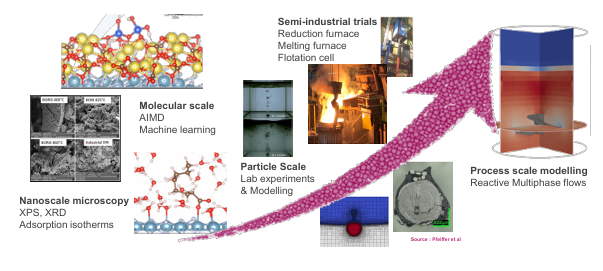
In this context, the project will trace the journey of a metal oxide, from the mine to its smelting, within this new environment, covering five key stages:
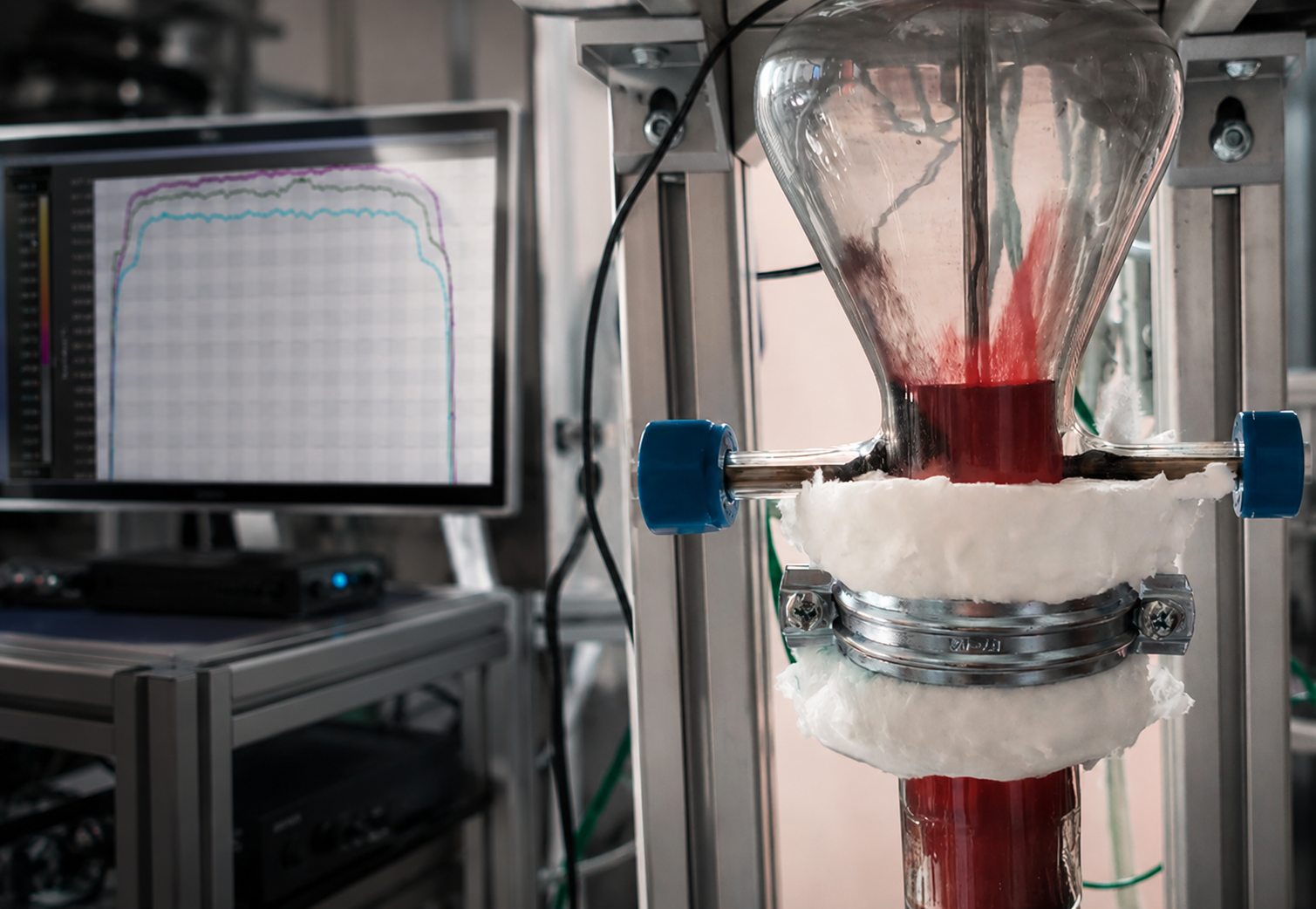
– Direct Reduction: hydrogen-based reduction (H₂-DR), which is the key process for reducing the industry’s emissions. – Smelting in electric furnaces: electric furnaces are widely used for smelting raw materials. The main challenge associated with decarbonisation is the handling of new types of materials, such as H₂-DRI and biomass additives.
– Comminution: an operation aimed at reducing the size of the ores and liberating the mineral particles; it represents the main source of energy consumption in ore processing.
– Flotation: by modifying the hydrophobicity of the particles, flotation has become the only solution for processing complex ores and thus effectively separating the oxides from the gangue. Thanks to its efficiency, this process will supply high-quality metal oxides to the new decarbonised production chains; however, it is not yet optimised, making it a time-consuming and costly stage.
– Sintering: a process necessary to prevent clogging in furnaces and to ensure good reducibility, which accounts for 12 per cent of the steel industry’s total CO₂ emissions.
The transition of the metallurgical industry towards decarbonisation requires a fundamental understanding of the grain-scale physical phenomena occurring during the various processes mentioned above. This project will address crucial issues relating to solid–gas reactive flows, surface chemistry and microstructural changes. Elucidating these mechanisms through advanced characterisation, multi-scale modelling and laboratory-scale experiments (as part of the DEEP-MIN project) is essential for adapting industrial operations to decarbonisation efforts. This research will contribute directly to the decarbonisation of the metallurgical industry in two significant ways:
– By providing an in-depth understanding of decarbonisation scenarios across the entire production chain, from raw material preparation to upstream processes.
– By optimising industrial operations and raw material selection through advanced numerical modelling, thereby reducing CO₂ emissions and energy consumption in mineral and metallurgical processes.
The consortium
More projects