DIF Project
Decarbonising Industry through Finance

Project coordinated by the University of Lorraine
Duration: 4 years
A budget of 2.9 million euros
5 partner universities
Scientific objectives
The DIF (Decarbonising Industry through Finance) project aims to analyse and facilitate the reorientation of the financial flows essential to the ecological, energy and digital transitions, recognising that carbon neutrality cannot be achieved without a profound transformation of the financial mechanisms that guide investment decisions, alongside technological and industrial innovations.
To achieve this, DIF draws on multidisciplinary academic expertise in green finance, industrial decarbonisation and governance, underpinned by strong institutional and industrial partnerships, in order to develop tools and strategies capable of aligning industrial decarbonisation with financial, economic and regulatory frameworks, whilst ensuring a fair, competitive and sustainable transition.
LThe project addresses critical gaps in current research through four main areas of focus:
(1) the development of multi-scale analytical tools to assess the societal drivers of decarbonisation, such as employment, skills and regional equity.
(2) interdisciplinary modelling combining economics, finance, law and environmental sciences to analyse trade-offs between performance and sustainability.
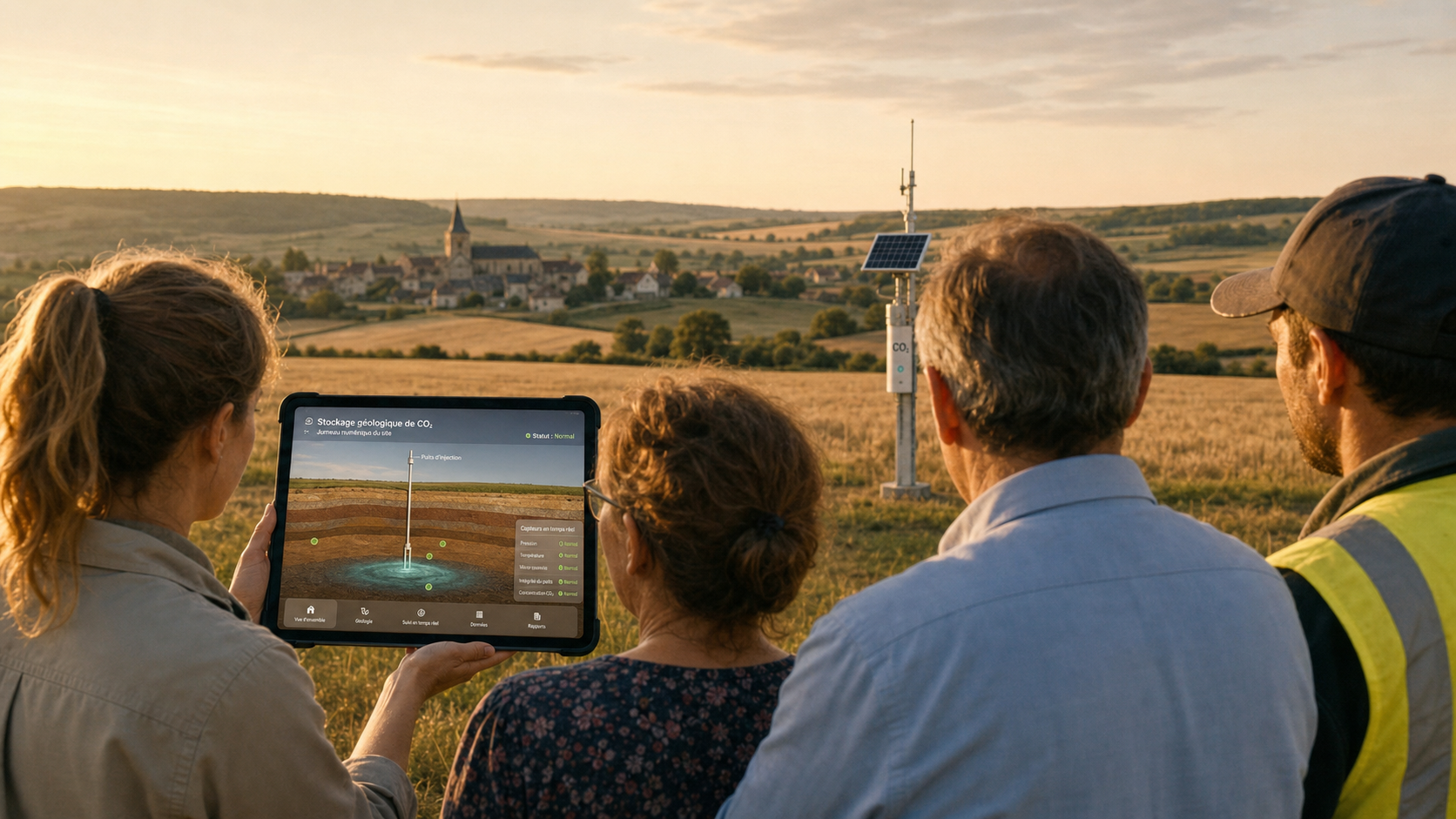
(3) the integration of carbon capture and storage (CCS) into financial and regulatory models, by assessing its economic, fiscal and social feasibility.
(4) the transformation of corporate financial and accounting practices to incorporate sustainability, in accordance with the CSRD/ESRS and the European taxonomy.
To this end, DIF utilises advanced analytical tools (DSGE models, real options, dynamic games, econometrics) as well as techno-economic analyses of CCS processes, in order to validate their viability and competitiveness.
Organised into four work packages, the project assesses policy instruments (Work Package 1), financing conditions for SMEs (Work Package 2), the financial transformation of businesses (Work Package 3), and techno-economic feasibility (cross-cutting work package), with the CSC serving as the overarching theme.
Scientific objectives
Led by a consortium headed by CEREFIGE (University of Lorraine), bringing together academic and industrial partners, DIF ensures a practical grounding and the joint development of solutions with stakeholders on the ground. Expected outputs include optimised policy recommendations, innovative financing models, integrated ESG reporting tools, and open-access data, designed to support public decision-makers, financial stakeholders and businesses in achieving European climate targets, whilst balancing competitiveness, sovereignty and social justice.
Finally, an ambitious dissemination strategy – including scientific publications, policy briefs, training programmes and public awareness campaigns – will ensure a broad and lasting impact by promoting finance aligned with the green transition, enhanced transparency and inclusive industrial transitions.
The consortium
More projects