Reducing the industry’s carbon footprint: the challenge of cooling
Cooling demand in industry: a key challenge for the energy transition
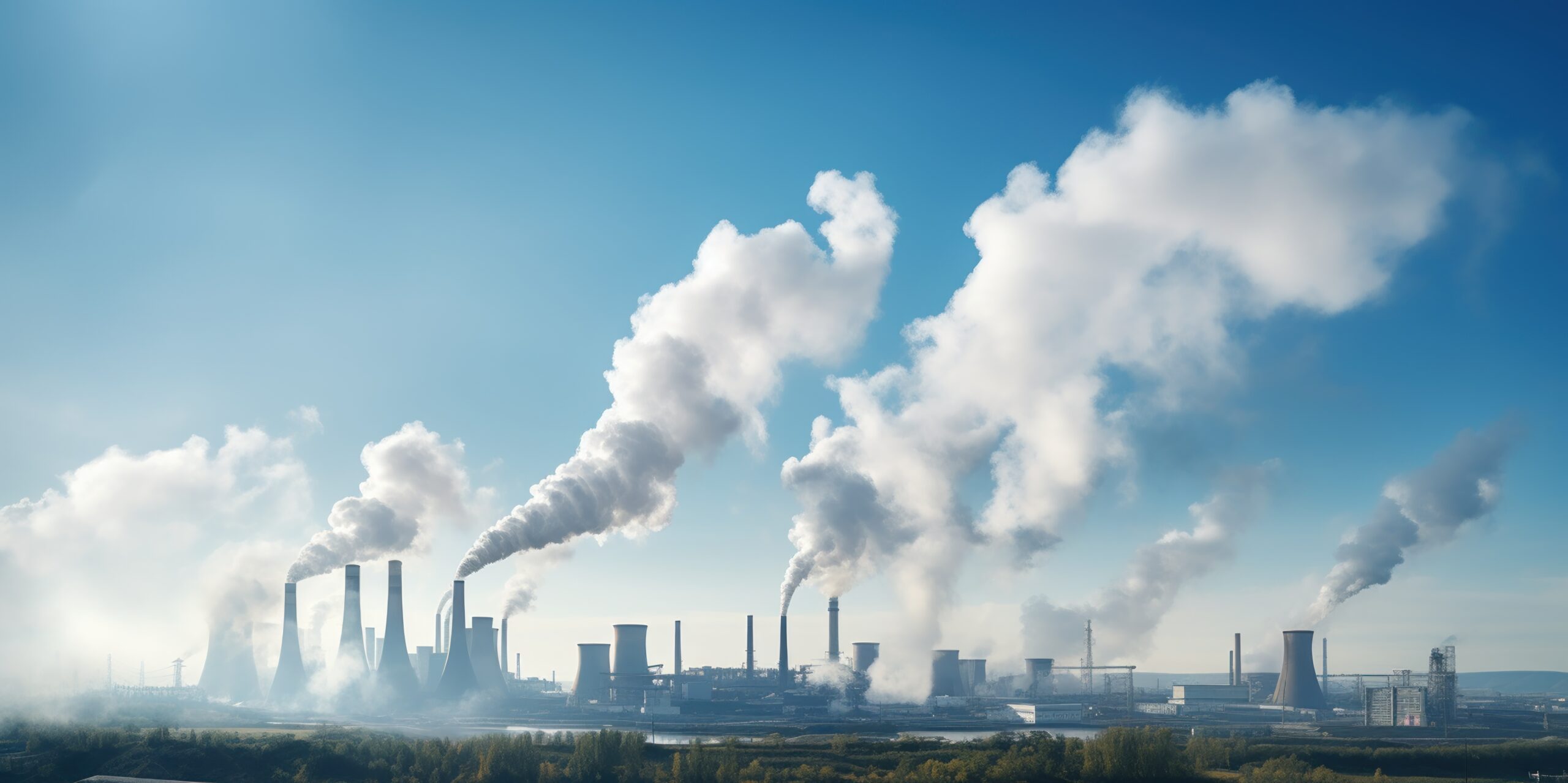
Heat management is a fundamental challenge in industry. Controlling industrial processes, which are often energy-intensive, requires optimal temperature control to maintain the efficiency and safety of facilities. As industrial sectors develop, the demand for cooling increases, raising questions about its impact on the environment. Traditional cooling systems, whether they use air or water, are often energy-intensive and indirectly contribute to greenhouse gas (GHG) emissions. According to the International Institute of Refrigeration (IIR), CO2 emissions from electricity consumption in the refrigeration sector are equivalent to approximately 10% of global energy-related emissions[1]. In this context, cooling becomes both a complex challenge and an area for innovation to reduce the carbon footprint of industries.
The principles of industrial cooling: energy-intensive solutions in need of rethinking
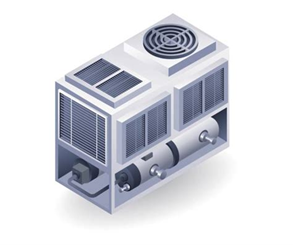
Industrial cooling is based on simple thermal principles: dissipating excess heat generated by equipment or processes. However, most existing solutions, such as water or air coolers, consume a significant amount of energy to circulate refrigerants or maintain a stable temperature in facilities. Despite their efficiency, these systems hinder energy reduction efforts in industry. For example, industrial refrigeration systems, such as mechanical compression compressors, often use refrigerants with high global warming potential (GWP), contributing to the greenhouse effect. According to a report by the European Environment Agency (EEA), these systems generate around 3-5% of global GHG emissions[1]. A poorly designed cooling system can lead to excessive energy consumption or unnecessary heat loss, compromising energy performance. Modernising thermal management in industry can help to overcome these pitfalls. These considerations are particularly relevant in certain sectors where cooling is essential to ensure quality, safety and performance.
Cooling and performance in industry: from steel to electronics
Whether in metallurgy, chemistry or electronics manufacturing, cooling plays a decisive role in the smooth running of production lines. In sectors such as metallurgy, high-temperature heat production is essential, particularly in metal processing and foundries. Equipment must be carefully cooled to avoid manufacturing defects or degradation of the material’s physical and chemical properties. The challenge is similar in the electronics industry: thermal management of components (processors, graphics cards, servers) is essential to ensure product reliability and performance. This growing demand, which is still largely dependent on energy-intensive technologies, conflicts with decarbonisation requirements. Improving thermal efficiency while reducing energy consumption is therefore crucial to avoid increasing the carbon footprint. The IIF estimates that industrial cooling systems account for around 20% of global refrigeration demand[1], highlighting the scale of the sector’s environmental impact.
Decarbonisation: cooling while reducing CO2 emissions
While decarbonisation is essential to achieving climate targets, reducing energy consumption related to industrial cooling is an interesting lever. Current heat control systems, which are often electricity-intensive or use fluids with high GWP, must evolve to meet increasingly stringent environmental standards. The goal is to limit CO₂ emissions and climate impact. At the same time, many manufacturers are seeking to integrate renewable energy sources. For example, air cooling systems can be improved by using solar energy to pump air or power compressors. Integrating solar energy could significantly reduce CO₂ emissions. Passive cooling systems, which do not require active mechanical or electrical energy, are also attracting growing interest, although they remain limited to specific applications or suitable environments. Beyond current solutions, the future of cooling lies in innovation and the structural transformation of industrial thermal systems.
Towards a more sustainable future: the challenges of tomorrow’s cooling systems
Faced with the energy crisis, manufacturers must reinvent their cooling infrastructures by incorporating more energy-efficient and resilient technologies. The technological innovations being explored, such as those in the ATHENA project of the PEPR SPLEEN[1] – a cooling system that uses thermal energy and incorporates an ejector into the ammonia-water absorption cycle – are paving the way for more energy-efficient thermal technologies. However, the transition to sustainable solutions requires a thorough overhaul of existing industrial infrastructure and investment in cutting-edge technologies. Ultimately, the goal is to integrate cooling in a more intelligent and environmentally friendly way, using innovative materials, more efficient processes and renewable energy sources. In this context, industry has a key role to play in reducing its ecological footprint. When redesigned with sustainability in mind, cooling systems can become a strategic lever for industrial transition.
[1] https://iifiir.org/fr/actualites/new-iir-figures-highlight-the-role-of-the-refrigeration-sector
[2] Air Quality in Europe – 2020 Report. https://www.eea.europa.eu/en/analysis/publications/air-quality-in-europe-2020-report
[3] Baha M., Hammami S., Dupont J-L. The role of refrigeration in global economy. 3rd edition. 60th
[4] Technical Brief on Refrigeration Technologies. International Institute of Refrigeration (IIR), Paris.
http://dx.doi.org/10.18462/iir.TechBrief.04.2025 [1] https://www.pepr-spleen.fr/projet/projet-athena/
More news News